

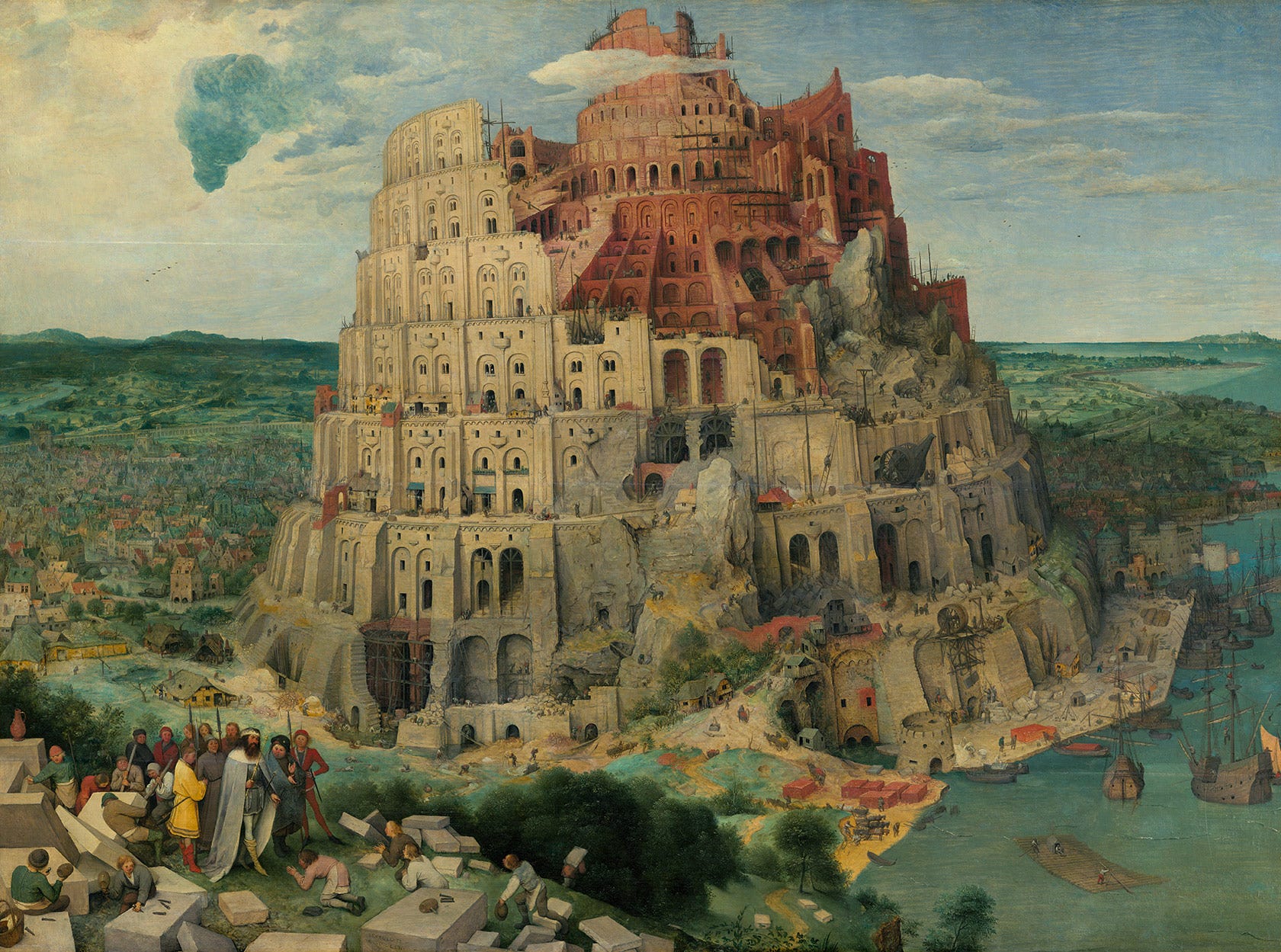
Tales of apocalypse has always been useful. From Cold War strategists to the War on Terror, every age finds its own end of the world and every age concludes that extraordinary threats demand the suspension of ordinary limits on power. Artificial intelligence is simply the newest entry in this genre. We are told the technology is so uniquely dangerous that free speech, privacy, competition, open research, and democratic accountability must all be sacrificed for our survival. Not coincidentally, the beneficiaries of sacrifice happen to be the wealthiest people and companies in human history.
Regulatory Capture in Disguise
Bruce Yandle’s “Bootleggers and Baptists” theory explains how durable regulation often emerges when two very different coalitions support the same restriction for different reasons: the “Baptists” provide the moral language and public legitimacy, while the “Bootleggers” quietly profit from the restriction itself. Current AI regulatory proposals provide the perfect modern parallel. The Baptists warn of doom and insist that they are only trying to save humanity, while the Bootleggers provide the money, the lobbyists, the institutional access, and the quiet understanding that the rules being proposed will just happen to entrench the incumbents. In other words, someone with pure motives may inadvertently and indirectly promote the interests of the self-interested.
Big Frontier firms and their advocates know that a small startup working in a garage will not survive a vast compliance regime. A university researcher will not be able to compete with a trillion-dollar firm blessed by federal regulators. Open source developers sharing models on Hugging Face will be told that their work is too dangerous for public release, despite the fact that much of this ecosystem is not composed of godlike machines plotting the end of mankind but rather practical tools that researchers, companies, and hobbyists adapt for narrow and often mundane purposes. Hugging Face reported that in 2025 its ecosystem had grown to 13 million users, more than 2 million public models, and more than 500,000 public datasets, while one 2026 analysis found that in 2024 Hugging Face recorded an average of 2,199 new models created per day.
“AI regulation” sounds abstract until one considers what these open models actually do. Embedding models, for example, convert text into numerical representations that can be used for search, retrieval, classification, and semantic similarity, which means they help people find documents, organize information, and build better internal knowledge systems. A sweeping licensing regime would not simply restrain frontier labs. It would also burden the open, competitive, and decentralized ecosystem that allows smaller actors to build useful systems without asking permission from a handful of corporations and regulators.
Continuation of a Trend
The easiest way to centralize authority is to tell people that the normal rules are inadequate to confront the emergency. After September 11, Americans were told that liberty had to be balanced against security in ways that would have been unthinkable a decade earlier. During the nuclear age, international coercive inspection regimes were devised and regime change wars were carried out to prevent proliferation. During climate debates, the proposed solution is often not merely stewardship or innovation, but control of the world economy.
In each case, there is a real problem, but rather than addressing it through less invasive means, the powerful formulate and implement solutions meant to further their own interests. Concerns over terrorism, nuclear war, environmental degradation, and the negative side effects of AI are all valid. But it would be a mistake to take a real danger, elevate it into an existential emergency, and then use that emergency to justify extreme solutions crafted by self-interested parties.
A New Trend?
The decline of religious life in the West has left many without a framework for mortality, uncertainty, and suffering. Where religion once taught people to think in those terms, secular politics now offers thinner substitutes. At their best, believers understand that catastrophe is not an aberration but part of the human condition. Every life ends in an apocalypse of its own, and every civilization is temporary. The proper response to this knowledge is not panic, but humility. A society that loses this grounding becomes easy prey for prophets of doom because people who cannot sit with uncertainty will surrender freedom to anyone who promises safety.
The loudest voices do not simply argue for prudence. Prudence would mean better cybersecurity, clearer liability rules, and a sober understanding of how this technology will affect society. Instead, many argue for control. They want licensing, censorship, centralization, and a priesthood of approved experts, along with preferential rules for the politically well connected. We should be particularly suspicious of any regulation that acts as a de facto moratorium on open-source AI, as open-source language models pose perhaps the greatest threat to the profitability and dominance of the Big Frontier firms. While every age has had its prophets and warnings of final judgment, we should be wary that in an increasingly secular world, we do not allow these secular eschatologists to achieve their political objectives through fearmongering.
There is always an apocalypse to fear, there is always someone willing to explain why this time is different, and there is always a class of people eager to convert your fear into their dominance. The duty of those who value liberty is not to deny danger. It is to deny the prophets of doom the ability to convert timeless, human existential fear to a politics of control.