

Format Change
From now on I will be sending updates through Substack. I will be providing substantive blog posts about the broad state of AI-Cybersecurity from a business, policy and high-level technical perspective. Please share with anyone who may be interested and visit my website blog for a longer form discussion of the topics I will introduce in these emails.
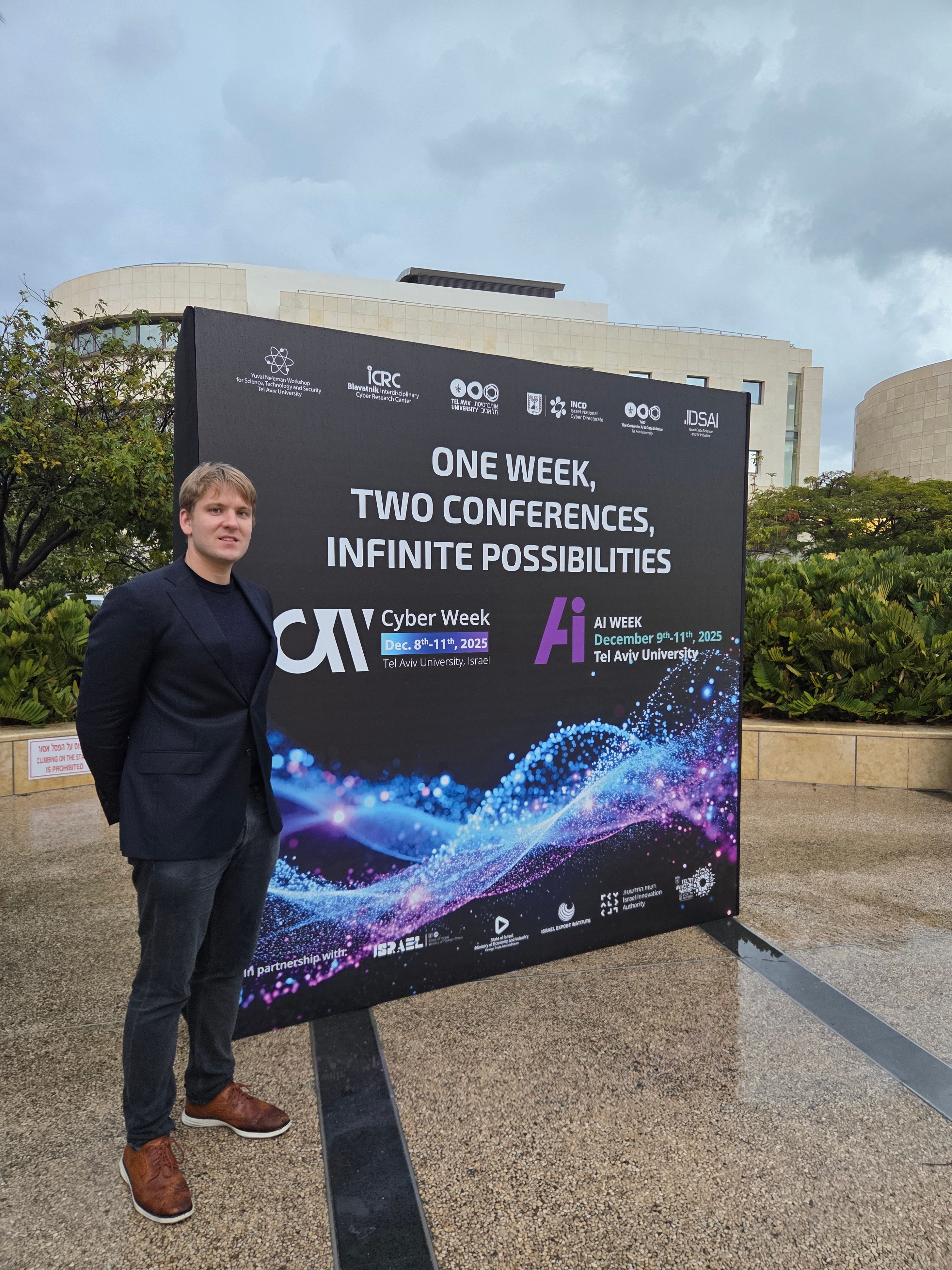
Earlier this month I had the privilege of attending a 3-in-1 conference in Tel Aviv. This event included Cyber Week Tel Aviv, AI Week Tel Aviv, and the AI Security Forum. In this and future blog posts, I will distill what I have learned into bite-sized chunks.
The new baseline
Across industry and government, the pressure to use LLMs like ChatGPT, Claude, Gemini, and Copilot is no longer optional.
Timelines are tighter, procurement cycles are faster, competitors are already automating knowledge work and teams need the productivity boost just to keep up.
The fastest way to get good output is to paste real context.
Unfortunately, this is also how strategy can become reconstructable.
A defense-tech scenario
Picture a defense-tech program team at a closed-door offsite. They are deciding which mission set to own, how to price a platform plus sustainment model, and which autonomy bets to prioritize.
They use an LLM for brainstorming, synthesis, and board-ready prose.
To make it useful, they paste churn drivers, objection maps, and internal margin thresholds. No single classified document. Just truthful fragments.
By the end of the day, the logic of the strategy is encoded in prompts and drafts.
A month later, there was no breach or vulnerability exploited.
No exfiltration.
Yet a competitor’s plan mirrors the same wedge and sequencing.
This is not just a defense tech issue
This inferability problem shows up everywhere.
In aerospace programs, it is teaming choices and propulsion roadmaps.
In energy and critical infrastructure, grid hardening priorities and procurement timing.
In biotech and pharma, trial site strategy and endpoint rationale.
In small doctors offices, patient details, referral sources, payer mix thresholds, and denial patterns.
In money managers and law firms, client facts, settlement ranges, investment constraints, and risk limits.
The right response
The answer is not banning LLMs. It is giving teams the confidence to use them safely.
That is what SenTeguard is built for, with three modes:
Blocking- to prevent strategy-bearing content from leaving controlled environments
Alerting- to prompt manual review
and Flagging- to record risky leakage patterns passively
Read my blog for a more in-depth discussion of these issues.
The longer-form post goes deeper on how “truthful fragments” turn into reconstructable plans, why this threat is accelerating right now, and how to build guardrails that do not slow teams down.
What this series will cover
In this new year’s blog series I will discuss AI-security, governance, inferability risk, and how teams can be more effective in the LLM era.